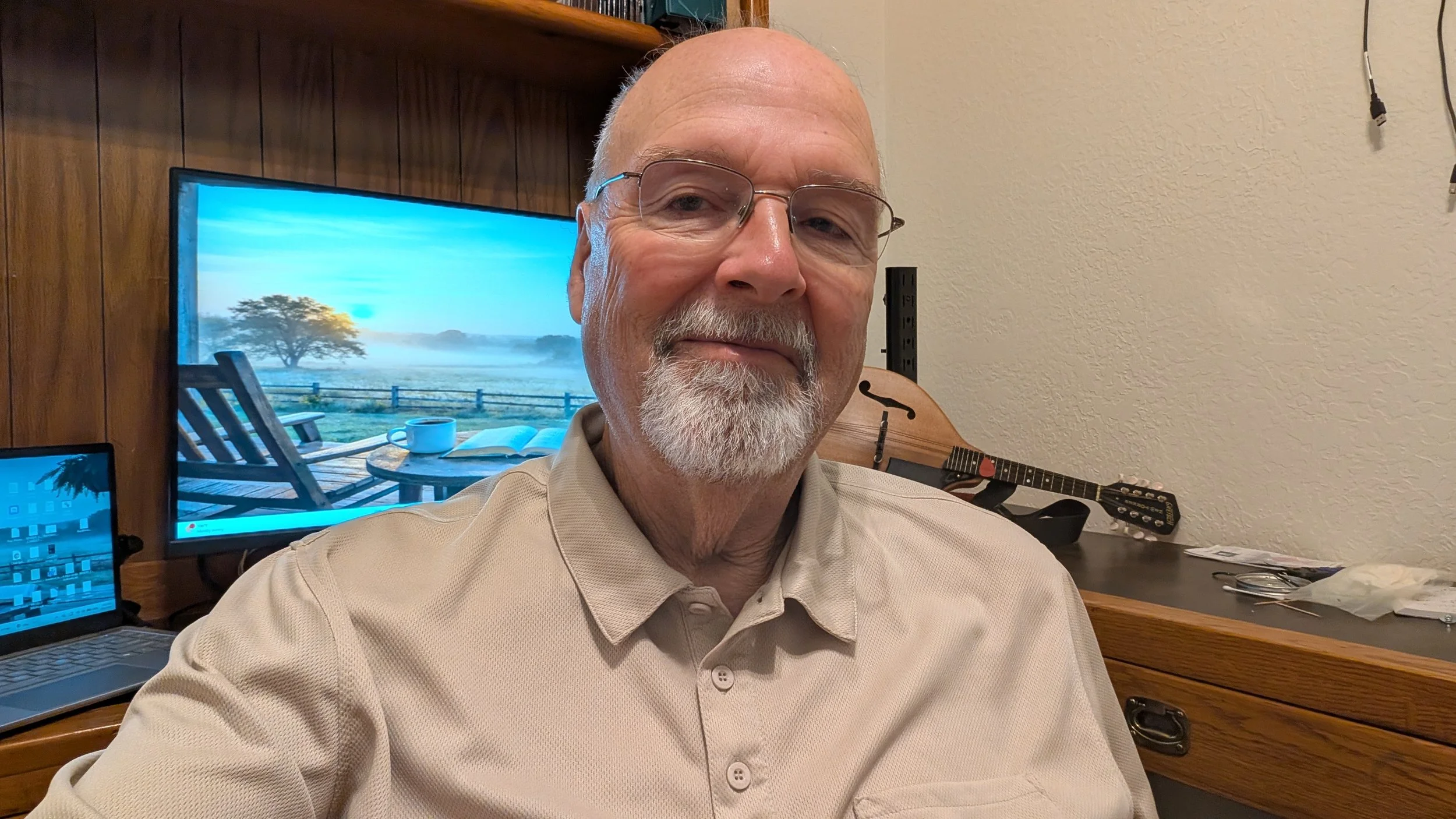
Meet the Author
Mark Ross Hurd was born in Shawnee, Oklahoma, and grew up principally in North Little Rock, Arkansas, and Muskogee, Oklahoma. Those places—and especially Oklahoma—shaped the way he sees people, culture, faith, history, and place.
His writing grows out of a lifetime of ministry, travel, trucking, regional observation, and Christian faith. He writes to help readers understand people they may never have met, places they may never have lived, and truths that have been there all along.
Places That Shaped Him
Muskogee, Oklahoma, became one of the strongest influences on Mark’s understanding of people. During the years of integration and forced busing, students from different races, neighborhoods, cultures, and economic backgrounds were brought together in one high school. Black culture, Native American heritage, cowboys, college education, politics, religion, and football all occupied the same community.
That environment taught him early that people are shaped by where they come from—but not confined by it. Oklahoma, Kansas, Texas, and Arkansas would later deepen that understanding, each carrying its own history, religion, industries, prejudices, loyalties, humor, and way of seeing the world.
Faith and Calling
Mark’s faith was shaped by several Christian traditions. His mother came from a Presbyterian background, while his father was Southern Baptist. As a young teenager, Mark became increasingly interested in the conservative Christian influence of the Churches of Christ and Independent Christian Churches. He was baptized while in the eighth grade.
Among the strongest Christian influences of his youth were Ron and Electra Lashley of Muskogee, whose example helped shape his understanding of discipleship and Christian life.
Years later, while working for an international oil-well servicing company and driving cross-country, Mark experienced what he understood to be God’s call into ministry. It happened personally, on the road. He returned home and told his wife, Carol. By the following fall, he was enrolled at Nebraska Christian College, graduating at age thirty and entering a life of ministry. Carol has remained a constant Christian example throughout that journey, especially in what unconditional love looks like when it is lived rather than merely discussed.
The Road as a Classroom

Why He Writes
Between ministries, Mark drove tour buses, over-the-road trucks, and oilfield hotshot equipment. His work eventually took him into roughly forty states—from Maine to Florida, California to Alabama, Wyoming to New Mexico.
Those miles changed the way he saw people. The young Oklahoman who once expected never to leave his home state discovered that regional cultures can be dramatically different while human beings remain remarkably alike. People want family, purpose, dignity, belonging, security, and hope.
Beneath all of it, Mark believes, is the same hole in the soul. Some people seek God to fill it. Some never find Him. Others reject Him altogether. But the longing remains.
Writing has been part of Mark’s ministry for most of his adult life. He wrote sermons, church-newsletter columns, and articles for Christian publications long before he began publishing books. One early article, “Pauling Your Timothy,” focused on Christian mentoring and discipleship.
That same instinct still drives his books: to help readers see people, places, and spiritual truths more clearly. In Moments With Gil, profound Christian truths are often seen through the eyes of a simple man. Mark wants a bank president to be able to meet someone like Gil on the page and come away understanding and loving him.
The BENDER series approaches the same purpose from another direction. It examines what Scripture says about the operation of evil in human life. Rather than borrowing Hollywood-style images of spiritual phantasms or invented supernatural mythology, Mark deliberately works within biblical ideas of temptation, deception, human choice, hatred, truth, authority, and mercy.
Ultimately, Mark wants someone in Maine to understand people in Oklahoma. He wants someone sitting on a California beach to understand why Sunday-morning worship can be woven deeply into the culture of another community. He wants readers with education and money to recognize the worth of people who possess neither.
Understanding another person’s world does not require becoming that person. It requires seeing them.